Prompt engineering is the practice of designing and refining the instructions you give an AI model so it produces the output you want. Since language models respond to the exact wording, structure, and context of a request, small changes in how you ask can noticeably change the quality, accuracy, and format of the answer.
Common techniques
- Being specific and clear: State the task, audience, length, and format instead of leaving them to guesswork. “Summarize this report in three bullet points for a non-technical executive” beats “summarize this.”
- Providing context: Give the model the background it needs, such as the goal, constraints, and relevant data.
- Examples (few-shot prompting): Show one or more sample inputs and outputs so the model can copy the pattern, including both good and bad examples when useful.
- Step-by-step reasoning: Ask the model to work through a problem in stages before answering, which tends to improve results on logic, math, and analysis tasks.
- Role or persona: Tell the model what perspective to take, like “act as a code reviewer focused on security.”
- Structured output: Request a specific format such as JSON, a table, or XML tags so the response is easy to parse or use.
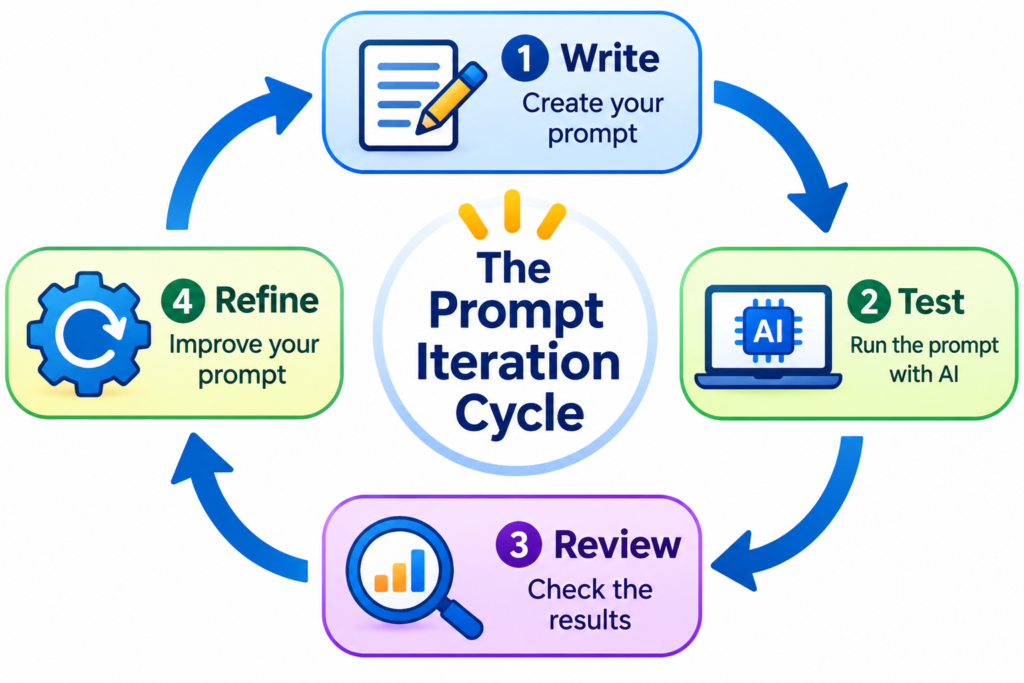
- Iteration: Treat the first prompt as a draft. Run it, see where the output falls short, and adjust.
Where it matters most
It becomes especially important when building applications on top of a model, where a prompt has to work reliably across thousands of different inputs rather than just one conversation. In that setting people test prompts against sets of examples, track failures, and refine systematically.
If you want, I can show you a before-and-after example of improving a prompt. And whenever you’re ready, paste in that design spec and I’ll get started on the review.

Prompt Engineering: How to Get Better Answers from AI
You ask an AI for help and get a vague, generic answer. You tweak a few words, ask again, and suddenly the response is sharp and useful. That difference comes from prompt engineering: the practice of designing instructions so an AI model produces the output you actually want.
Why wording matters
Language models respond to the exact wording, structure, and context of your request. They don’t read your mind, so anything you leave out, they guess. Prompt engineering is about removing the guesswork.
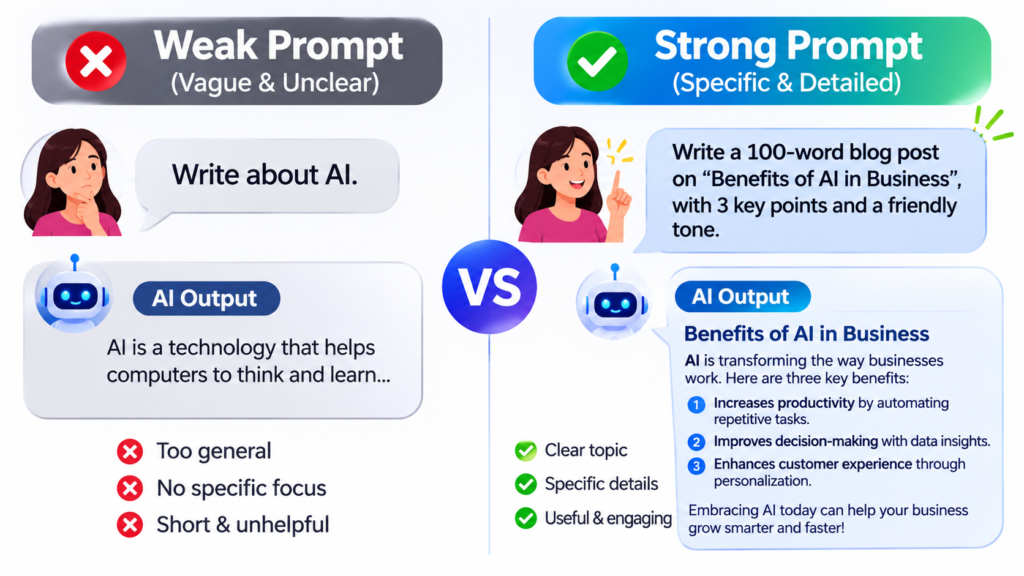
[Image 2: Side-by-side graphic of a weak prompt and a strong prompt with their outputs. Alt text: “Comparison of a vague prompt and a specific prompt”]
Compare these two requests:
- Weak: “Summarize this report.”
- Strong: “Summarize this report in three bullet points for a non-technical executive, focusing on cost and risk.”
The second gives the model a format, an audience, and a focus, so the result is far more usable.
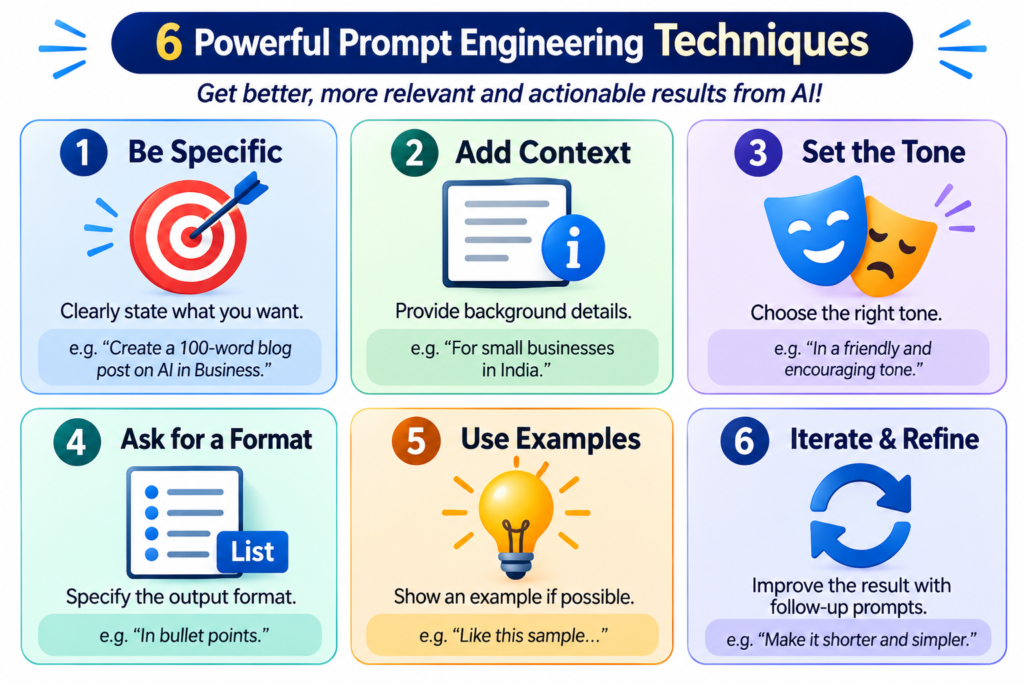
Six techniques that work
1. Be specific. State the task, audience, length, and format up front.
2. Provide context. Share the goal, constraints, and any background the model needs.
3. Show examples. Give one or two sample inputs and outputs so the model can copy the pattern. This is called few-shot prompting.
4. Ask for step-by-step reasoning. For logic, math, or analysis, asking the model to work through the problem in stages tends to improve accuracy.
5. Assign a role. Something like “Act as a code reviewer focused on security” sets the perspective and tone.
6. Request structured output. Ask for a table, JSON, or labeled sections so the result is easy to use or parse.
Iteration is the secret
Your first prompt is a draft. Run it, see where the output falls short, and adjust. Was it too long? Add a word limit. Missing detail? Supply more context. Wrong tone? Name the tone you want.
[Image 4: Simple loop diagram: Write, Test, Review, Refine. Alt text: “The prompt iteration cycle”]
Where it matters most
For casual use, a little care goes a long way. For businesses building products on AI, prompt engineering becomes essential, because a prompt must work reliably across thousands of different inputs, not just one conversation. Teams test prompts against sets of examples, track failures, and refine them systematically.
Try it today
Pick a task you do often, like drafting emails or summarizing notes. Write a prompt using two or three of the techniques above, compare the result with what you’d get from a one-line request, and keep what works.